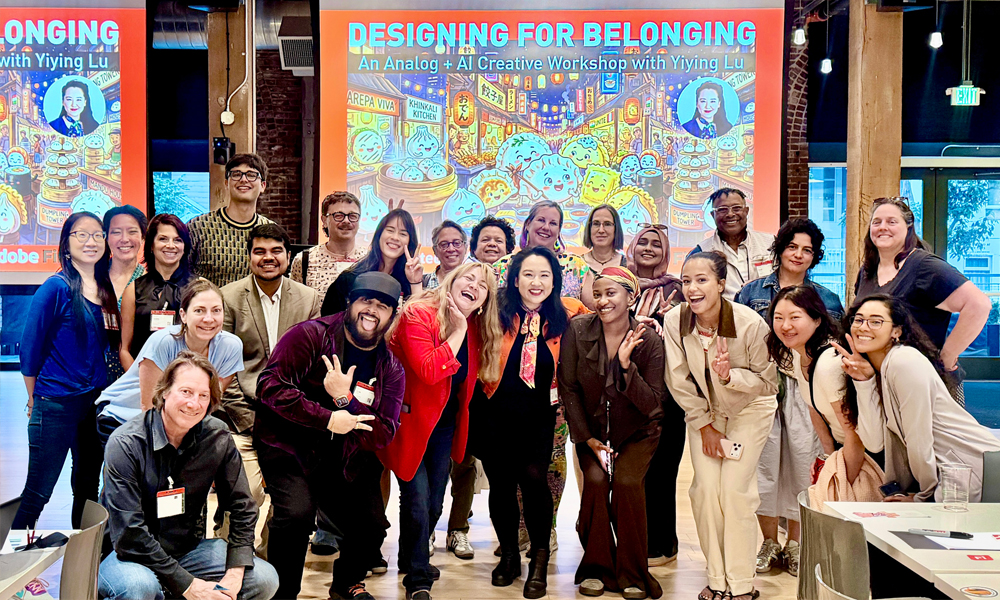
Human-Centered AI Workshop at Stanford

Designing for Belonging: Analog + AI
Human-Centered Creativity Workshop at Stanford University
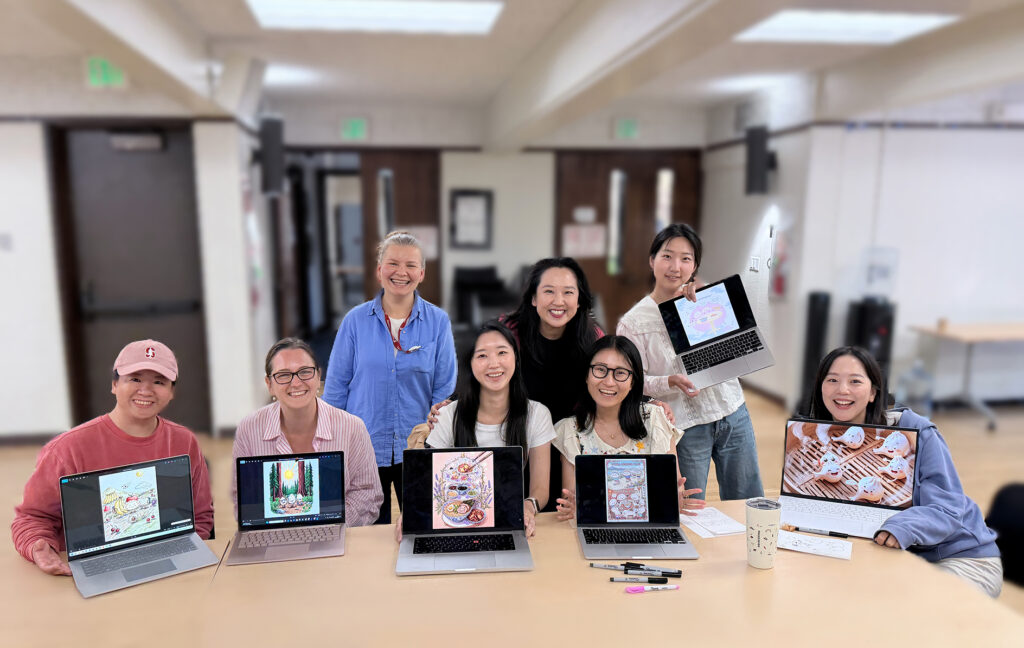
How can analog creativity and artificial intelligence work together to strengthen human connection?
Designing for Belonging is an interactive workshop created by Yiying Lu that combines analog drawing, storytelling, and generative AI to explore identity, connection, and community. Developed and refined over nearly 9 years through workshops with diverse communities, including IDEO, Airbnb, Dropbox, and Apple, it puts human creativity at the heart of the experience.
At Stanford University, the workshop brought together members of the international community at the Bechtel International Center for an experience designed around a simple principle:
Analog first. AI second. Human experience throughout.
The workshop begins with the story behind Yiying’s creation of the Unicode Dumpling Emoji 🥟 and explores how a simple visual symbol can carry culture, emotion, and identity across languages.
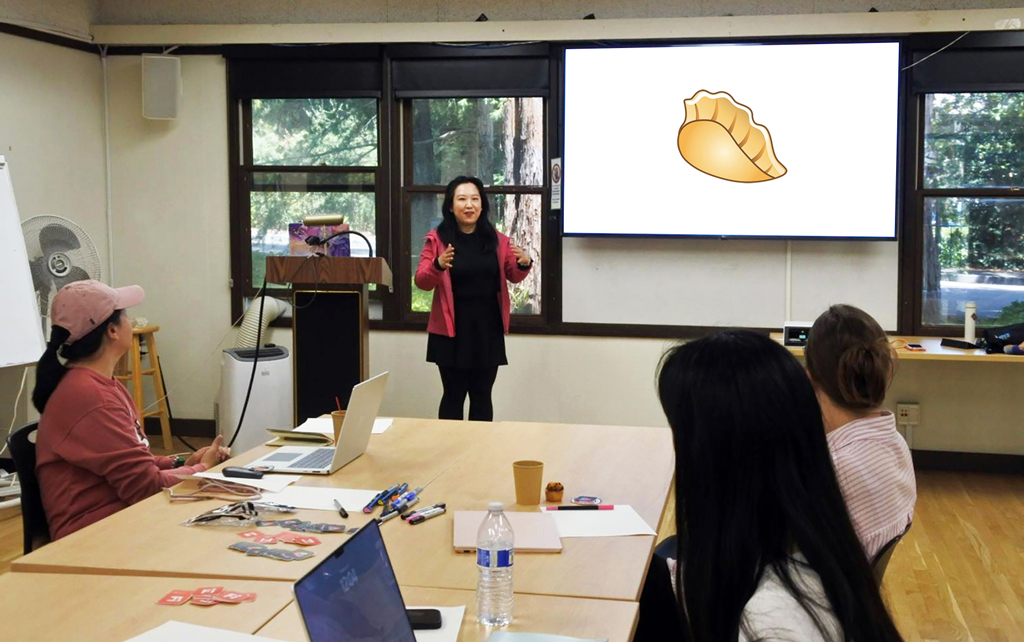 Participants then use Sharpies and paper to draw themselves as dumplings in a personal moment of non-belonging. Through guided storytelling and group sharing, individual experiences begin to reveal unexpected common ground across cultures and backgrounds.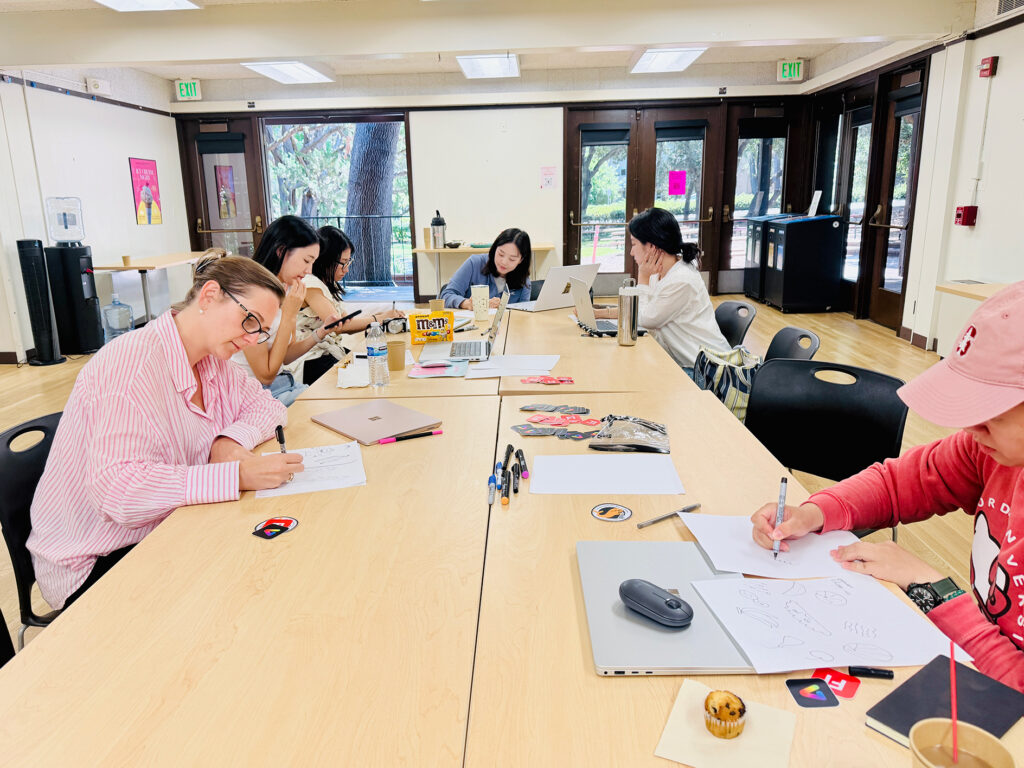
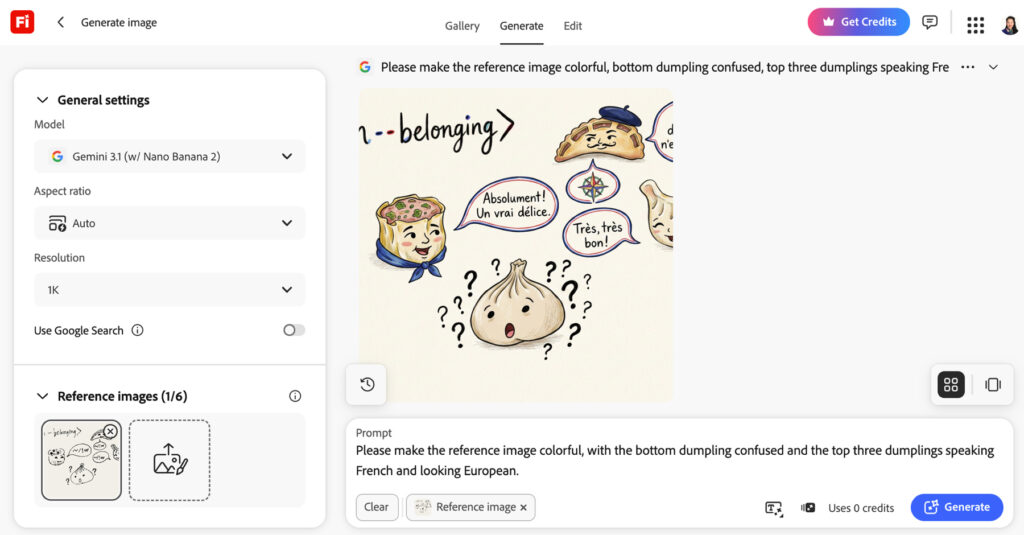
Once participants have captured their story by hand, AI becomes part of the process. They use their own drawings as reference images, using tools such as Adobe Firefly and Adobe Express, and experiment with generative technology to reinterpret moments of isolation as new visual narratives of connection and belonging.
AI doesn’t replace the human work here. It picks up where the drawing leaves off, and lets people see their own story differently.
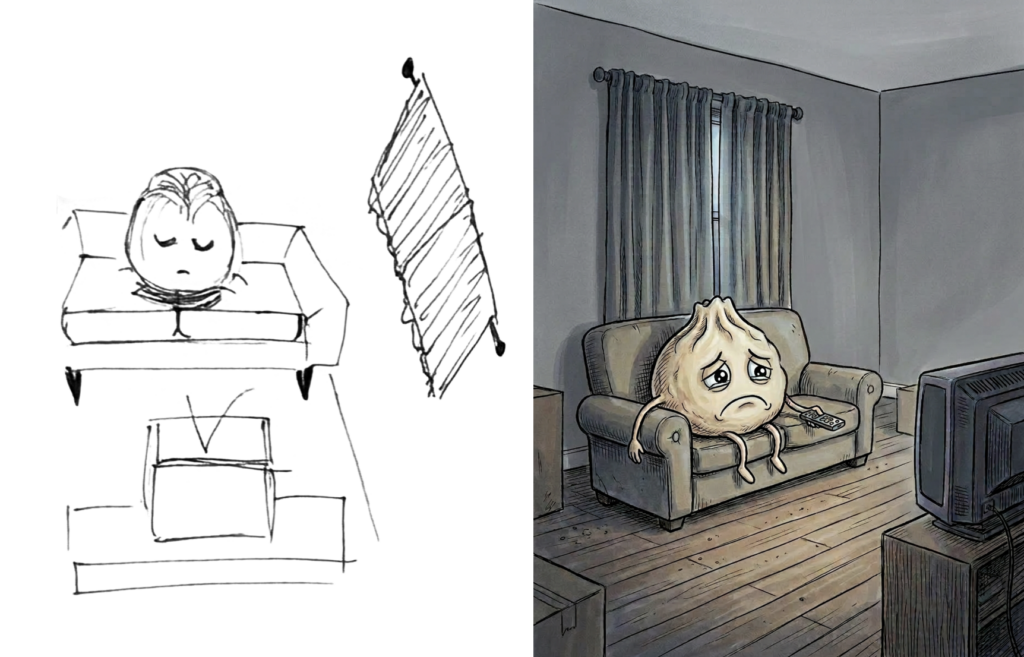
One participant, Siyoon, sketched her non-belonging moment as a dumpling: she had met new friends who all started speaking French, and she didn’t understand a word.
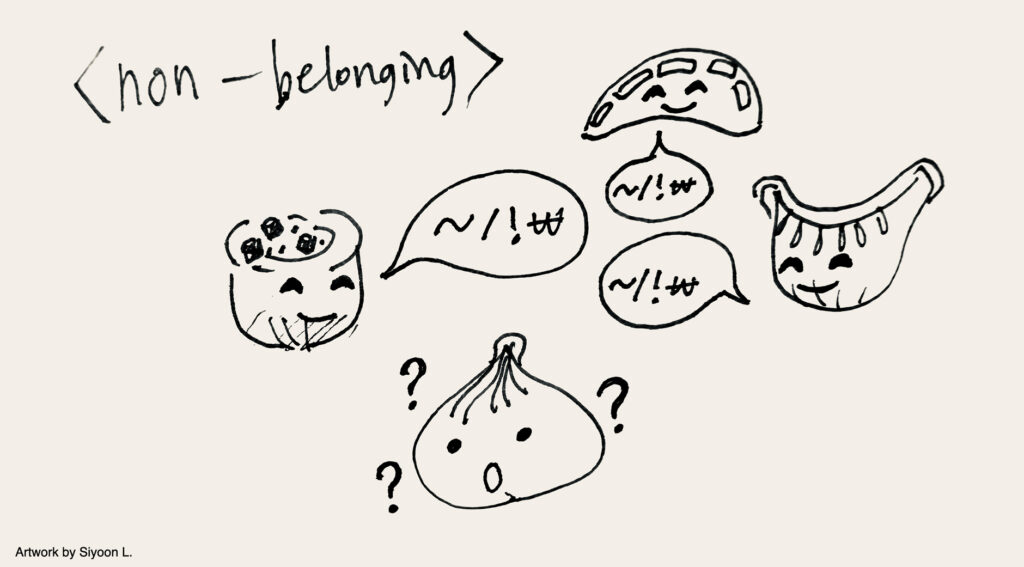
Then she uploaded the above sketch as a reference image to Adobe Firefly and typed her prompt: Please make the reference image colorful, bottom dumpling confused, top three dumplings speaking another language. Below is the Firefly AI-generated image using the Google Gemini 3.1 Model:
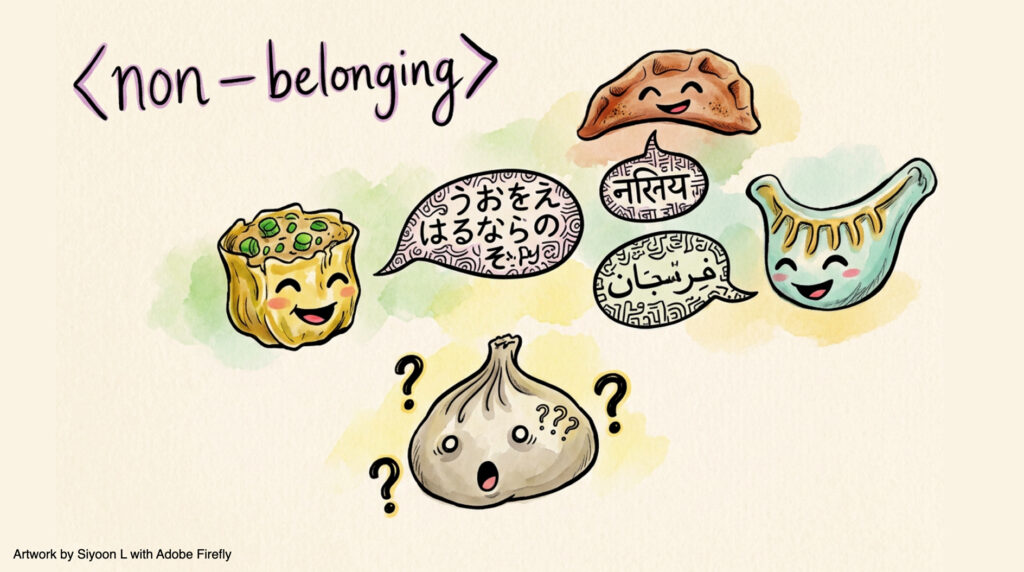
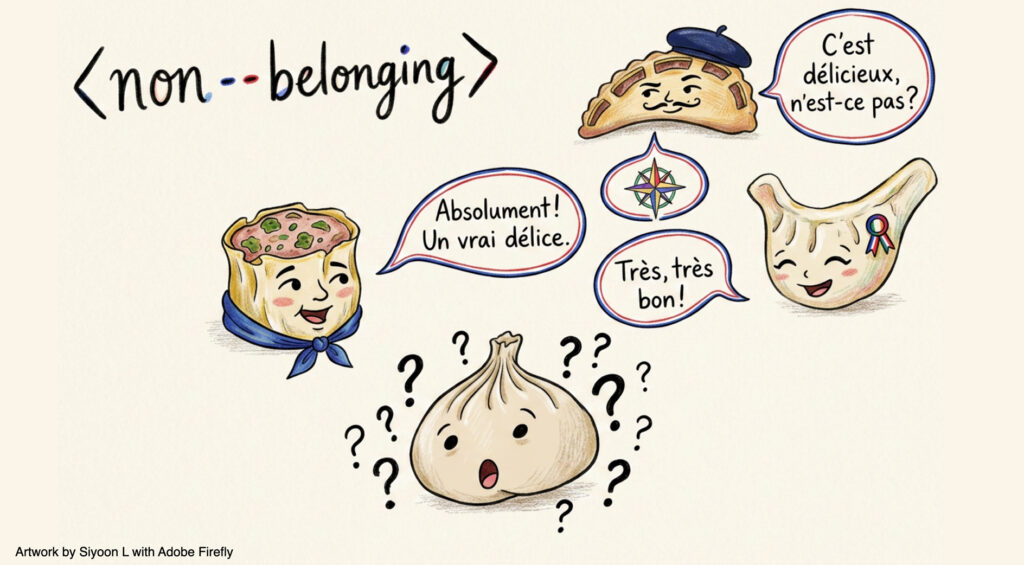
Then she made the prompt more specific: Please make the reference image colorful, with a bottom dumpling confused and the top three dumplings speaking French. Below is the Firefly AI-generated image using the Google Gemini 3.1 (with Nano Banana 2) Model. The AI understood the assignment and kept her original drawing style.
From Creativity to Connection
The Stanford session brought together participants from diverse countries, disciplines, professions, and life experiences.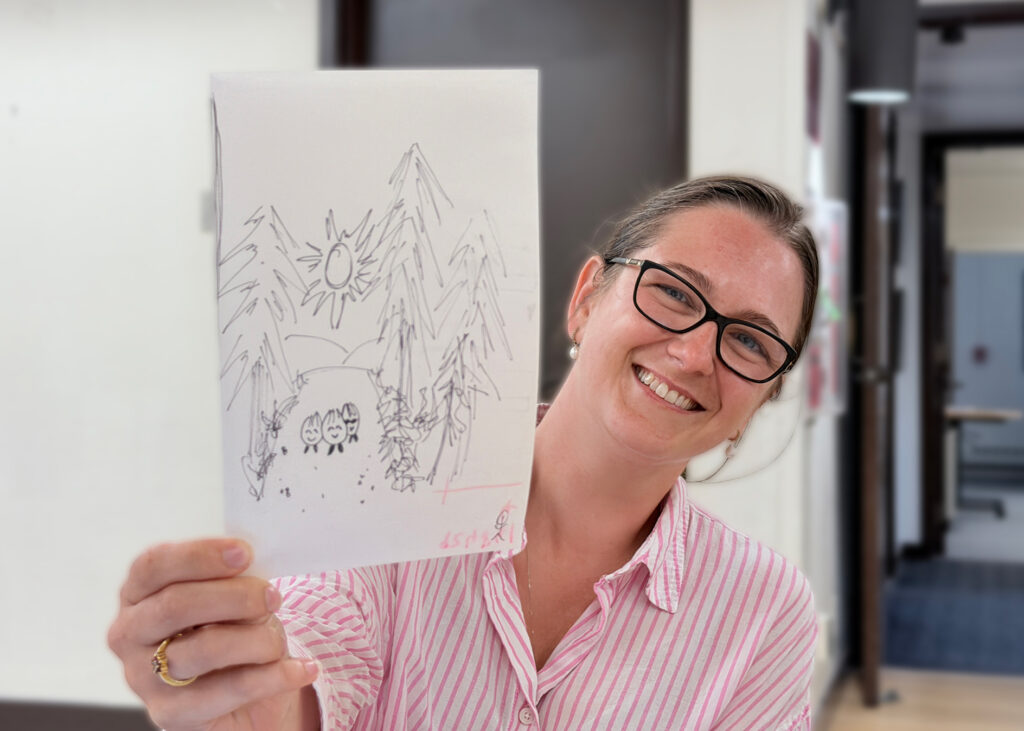
International spouse Sara is from the UK. Below, she shares her non-belonging moment, followed by her belonging moment: a journey from isolation to togetherness.
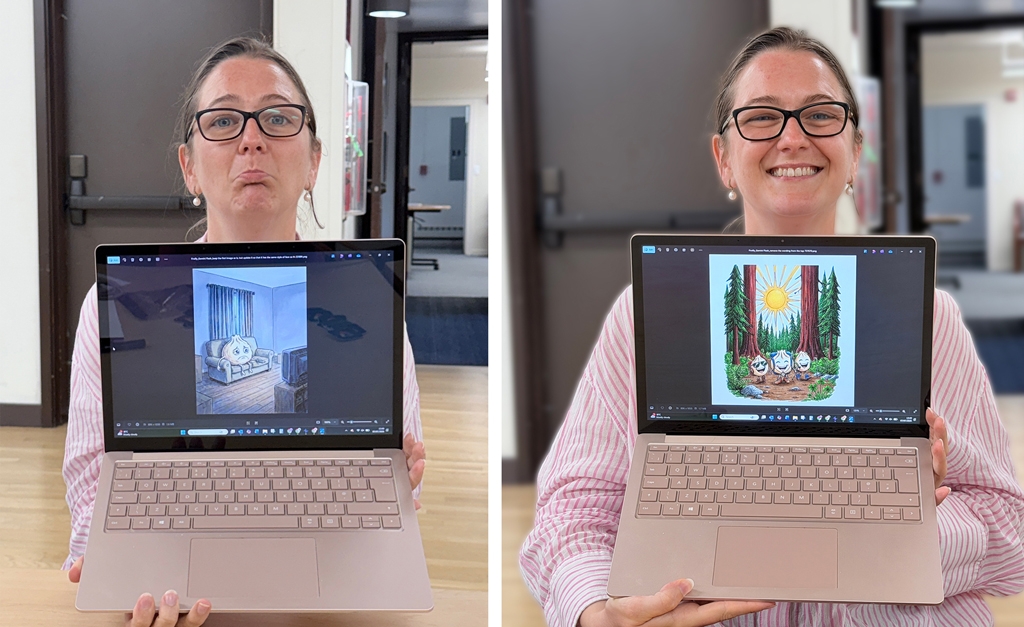
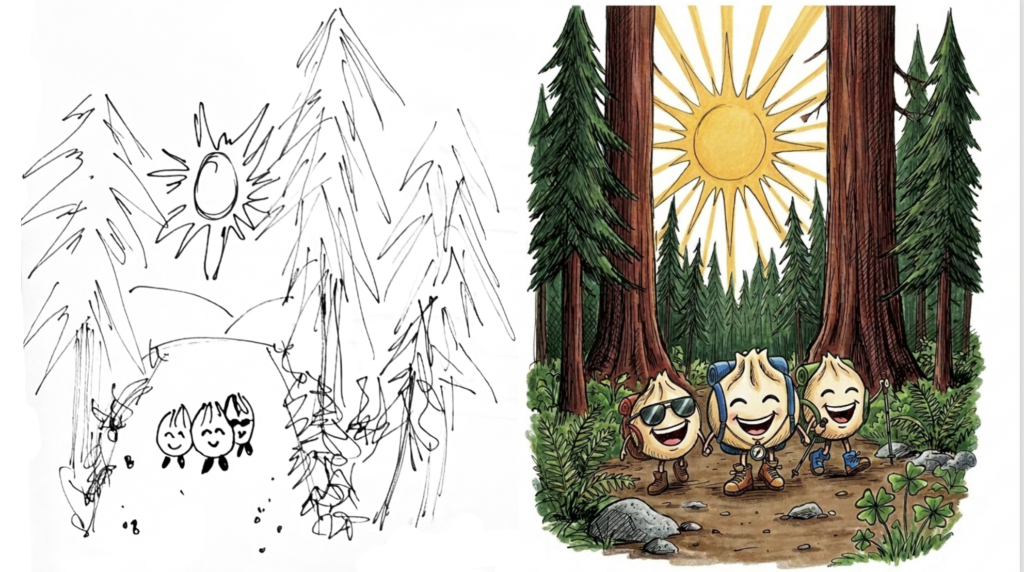
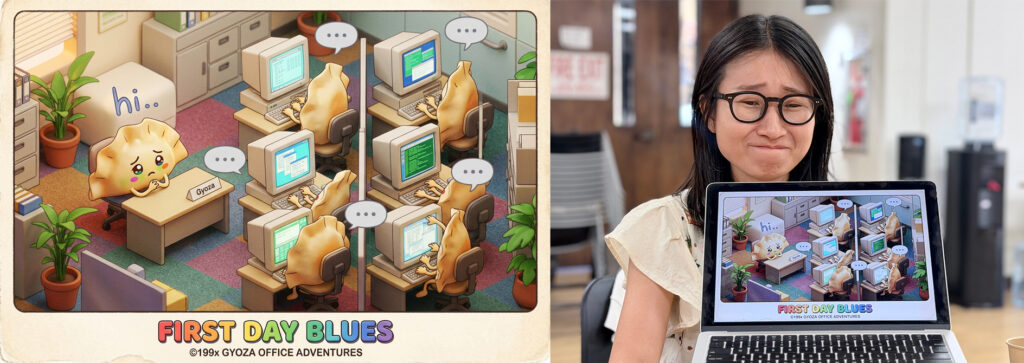
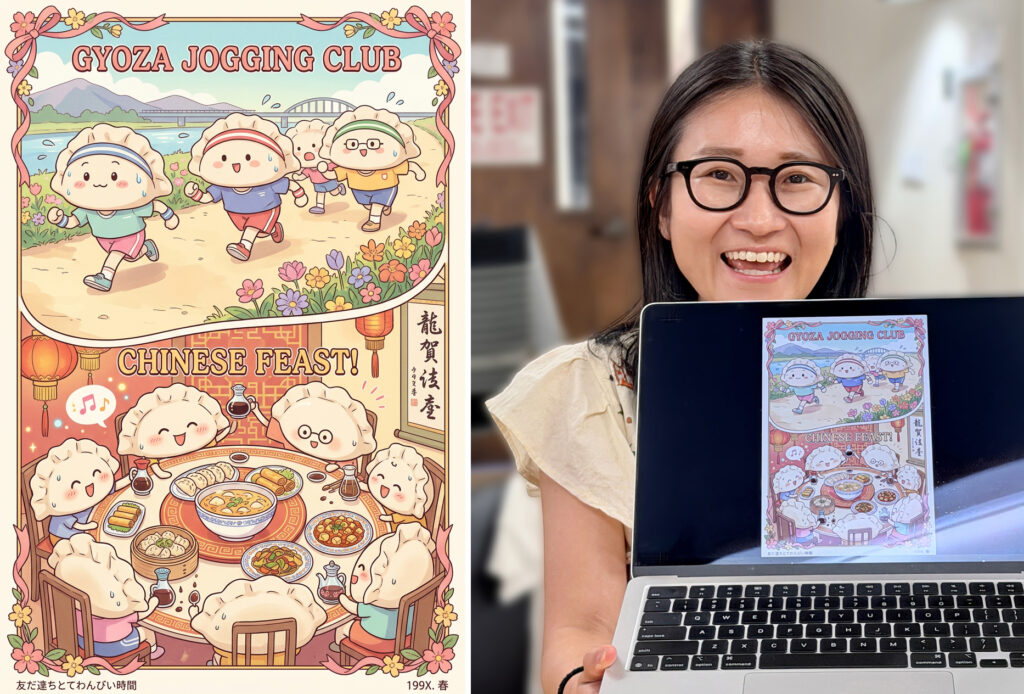
International spouse Akari is from Japan; she is also a designer. Below, she shares her non-belonging moment, “First Day Blue,” followed by her belonging moment, “Gyoza Jogging Club.”
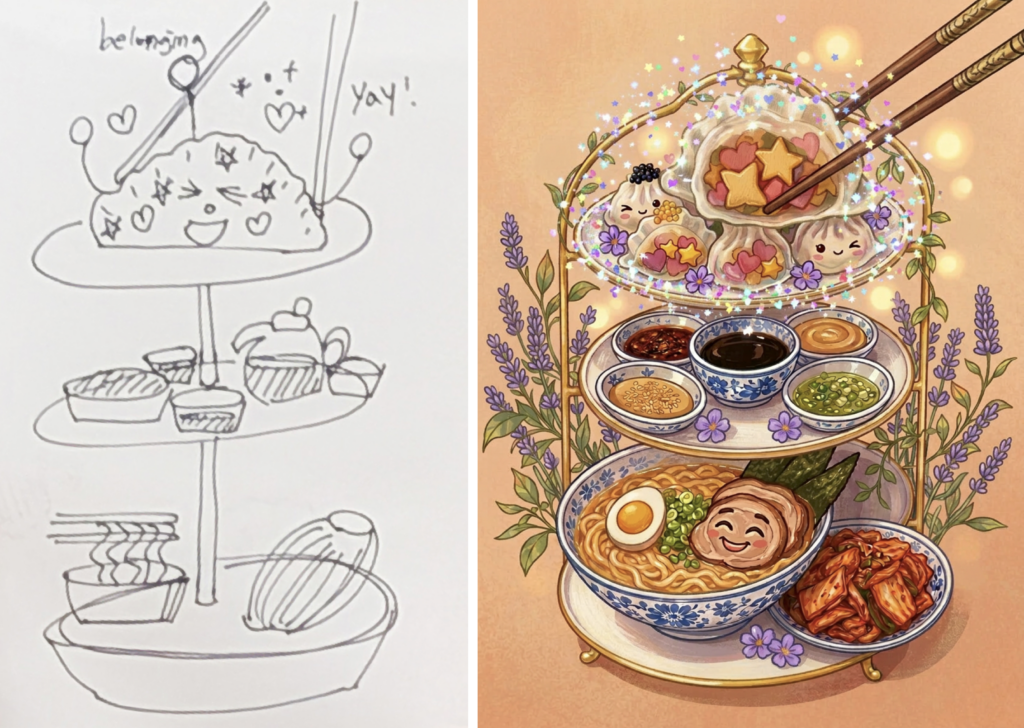
International spouse Ara is from Korea. Her non-belonging moment is a broken dumpling crying soup tears among shiny dumplings. Belonging arrives with ramen, soy sauce, kimchi, and other new food friends over a joyful high-dumpling tea.
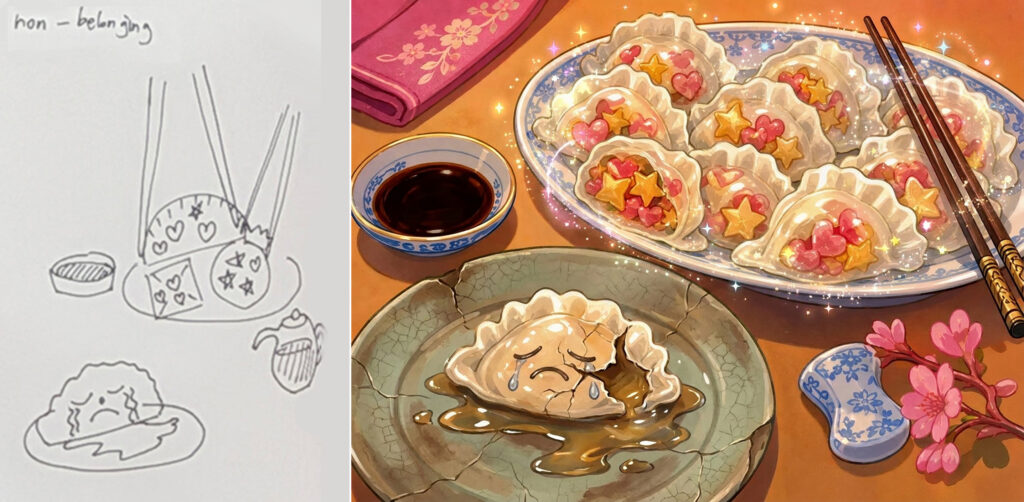
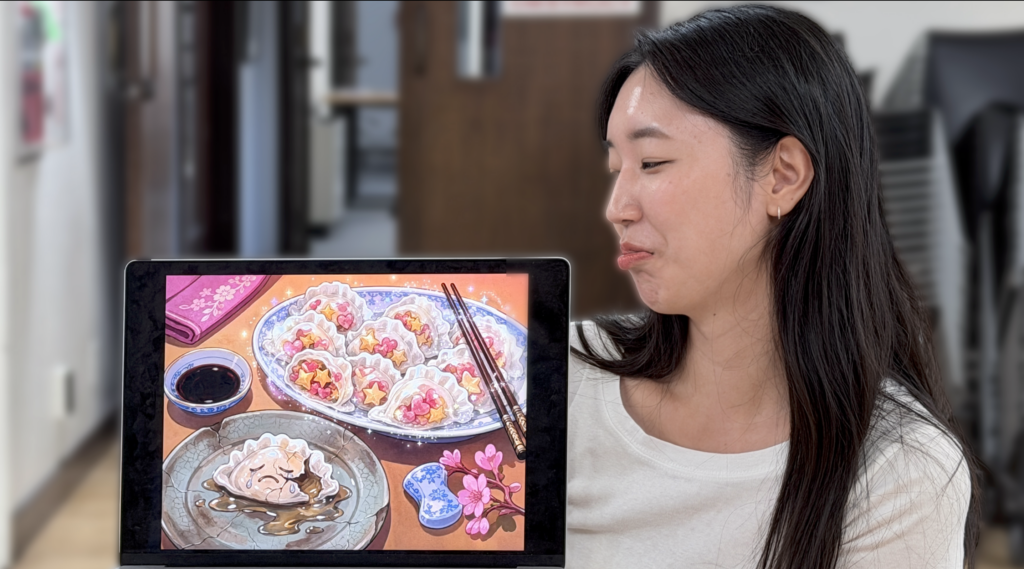
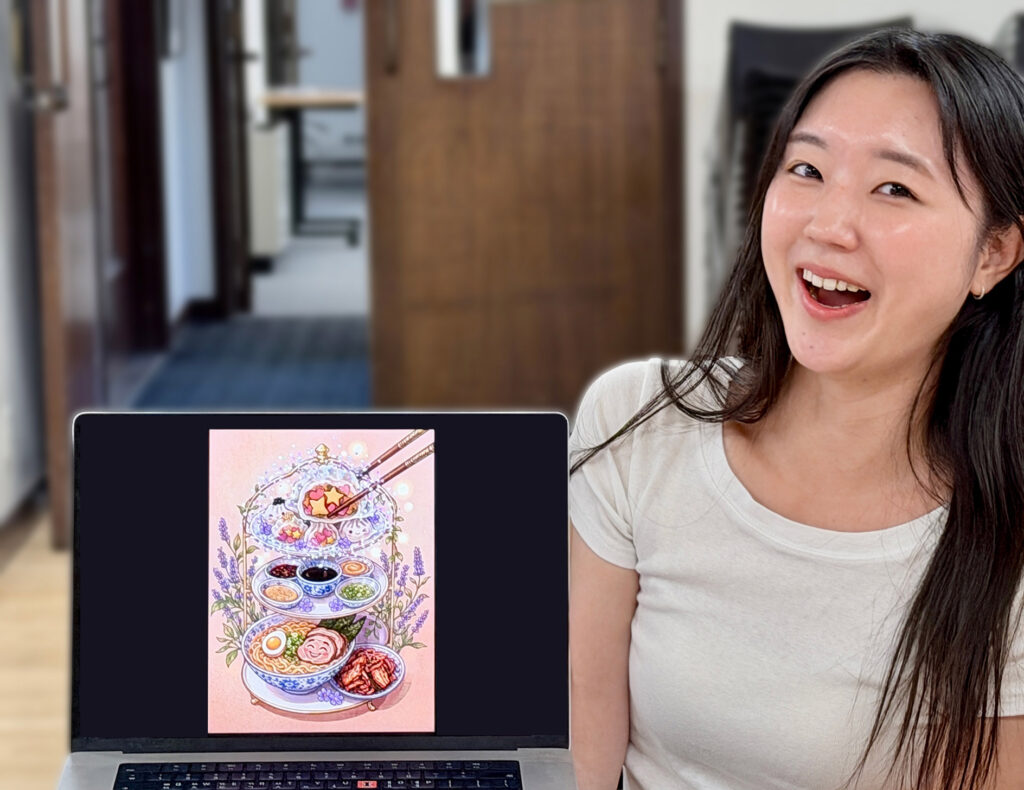
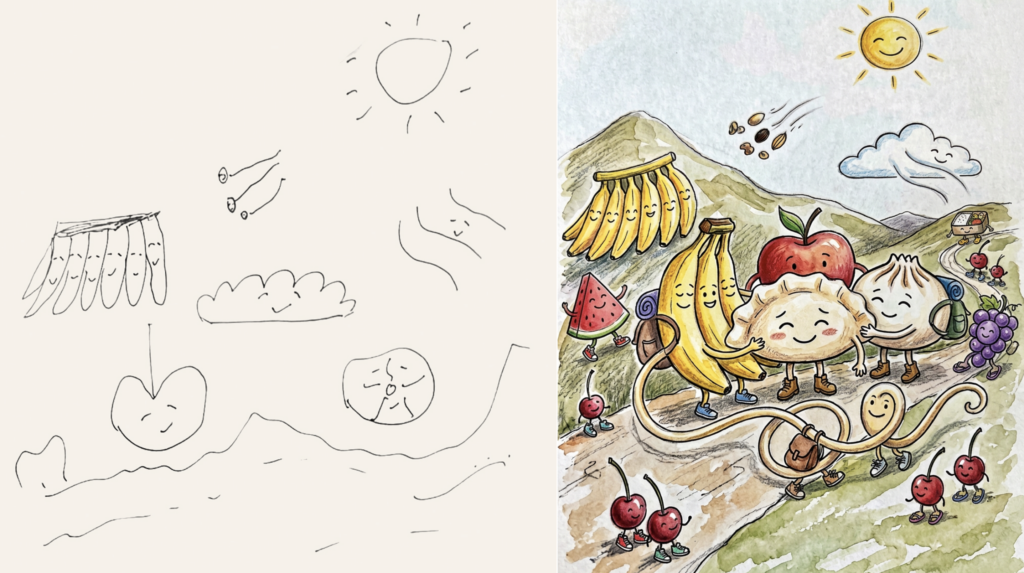
International scholar Xiaoyu is from China. Her hand-drawn sketch captures a moment of non-belonging on her first day on campus, shaped by language barriers.
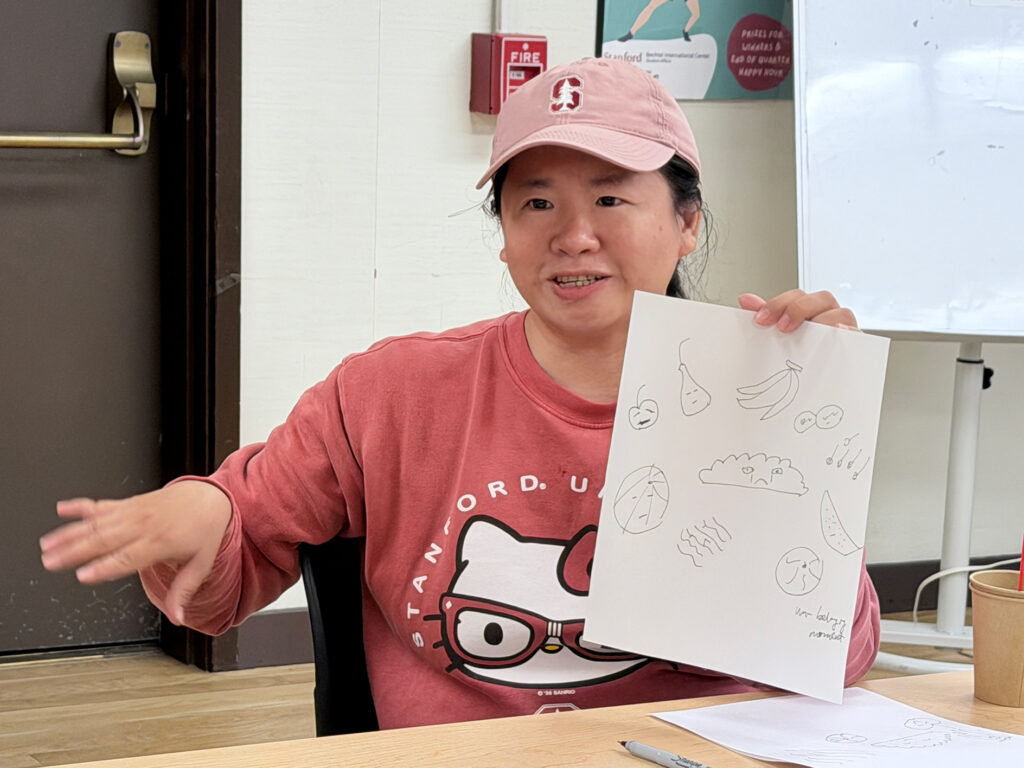
Xiaoyu’s non-belonging moment: “I felt like a crying dumpling amongst all the other fruits, vegetables, and food (noodles and sushi).” 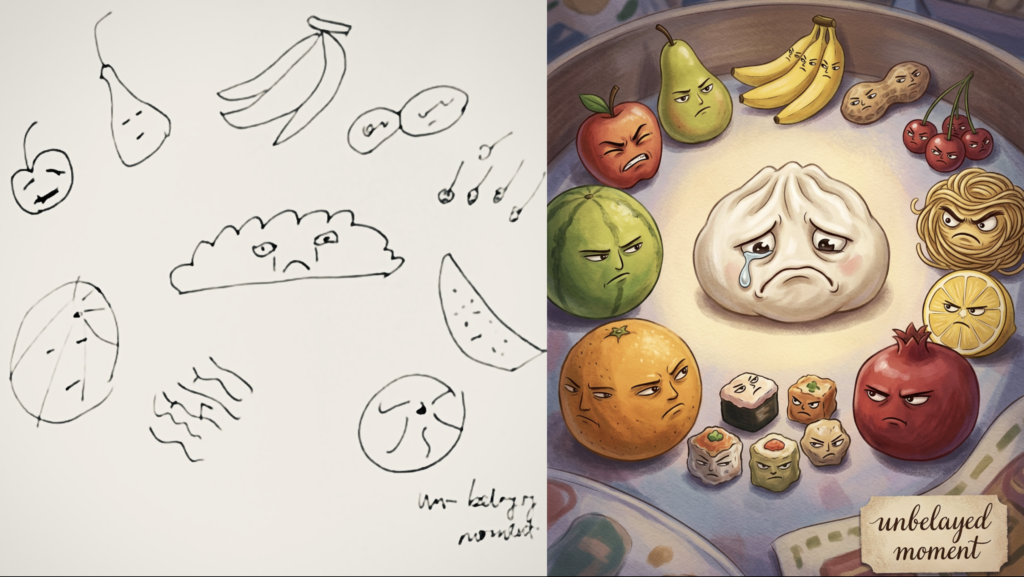
Then she created a moment of belonging, in which she had the courage to speak and feel more integrated and appreciated by the community. (P.S. We were all very impressed by the dancing noodle.)
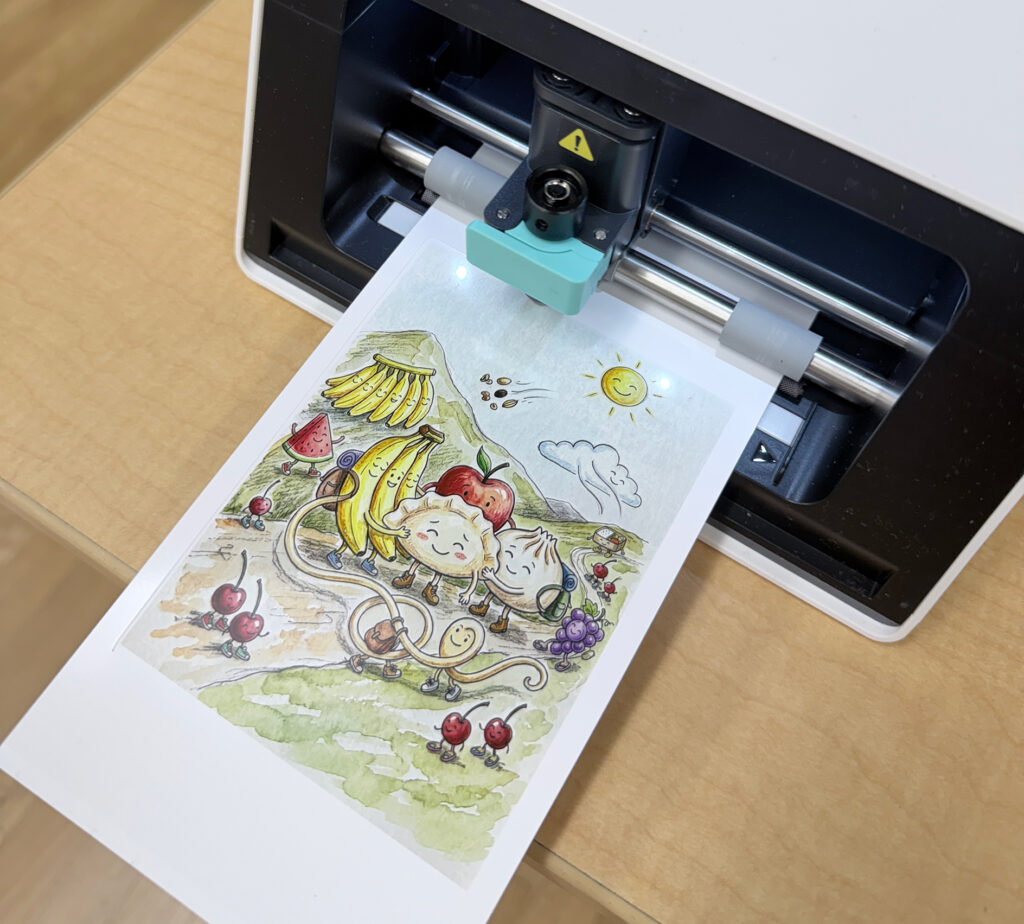
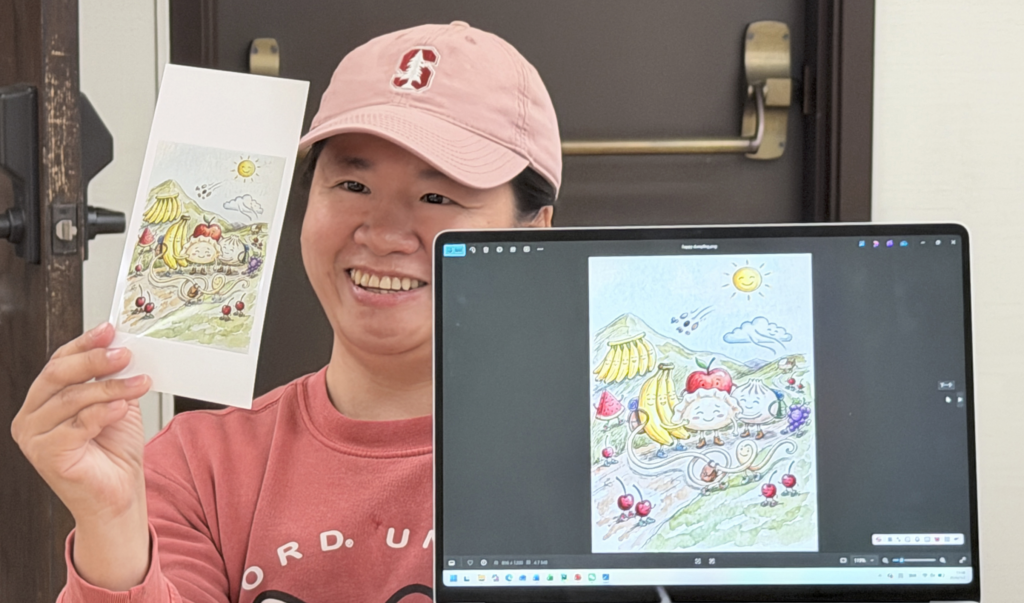
The final belonging images were printed as physical mementos for participants to keep, reminders of the moments when they felt they belonged.
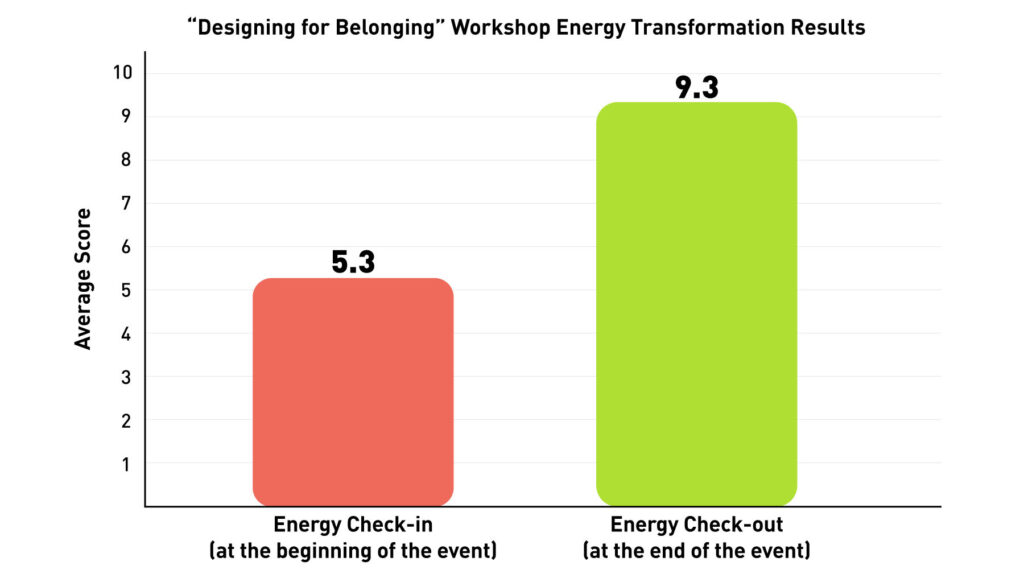
The workshop’s average self-reported energy level rose from:
5.3 / 10 at check-in → 9.3 / 10 at check-out
Participants described the experience as fun, healing, memorable, and unexpectedly powerful, especially in how a shared visual language helped strangers recognize parts of their own experiences in one another.
The workshop demonstrates how creativity, visual communication, storytelling, and human-centered AI can foster meaningful connection across differences.
Designed for Diverse Communities
The Designing for Belonging: Analog + AI format can be adapted for:
Universities and research institutions • international communities • interdisciplinary faculty and students • innovation programs • technology organizations • government and cultural institutions • corporate teams • startup and founder communities
The workshop can also support broader research and programming in human-centered AI, creativity and well-being, cross-cultural communication, visual literacy, and belonging.
Here’s what participants had to say:
This workshop was such a fun and welcoming experience. You don’t need any prior knowledge or artistic ability to enjoy it. Yiying’s positive energy is contagious, and she creates a genuinely encouraging atmosphere. I’d love to see more workshops on different themes because they help international friends build meaningful connections and a real sense of belonging.” —— Young-eun
Reflecting on myself and sharing my emotions through the unexpected medium of dumplings was a truly fun and healing experience.” —— Ara
Through the combination of storytelling and imagery, I was able to deeply resonate with everyone’s unique stories. I was amazed by how dumplings could become such a powerful medium for expressing diverse experiences and emotions!” —— Akari
Bring this workshop to your organization
Designing for Belonging: Analog + AI can be delivered as a workshop, keynote, or custom experience tailored to your community. It works for groups of 10 to 100+ participants, in person or online, and can be adapted for universities, companies, conferences, and cultural institutions.
Photo by Akari Meguro & Kate Khatseyeva
Related Projects: